

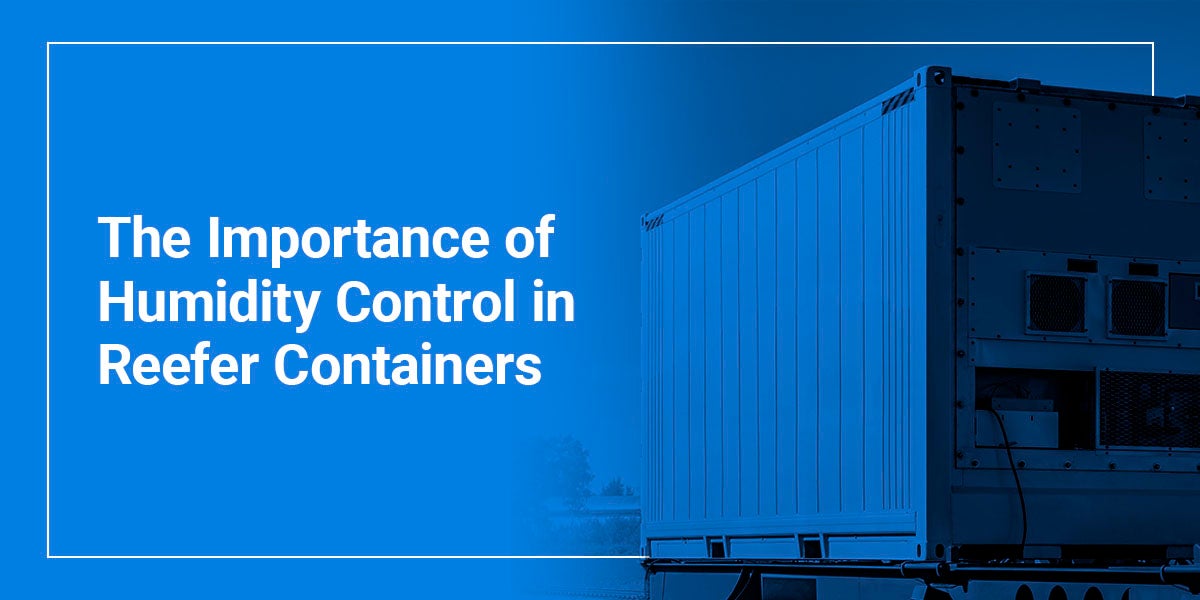
The cold chain works around the clock to deliver perishables like food and medicine to consumers worldwide. Every shipment needs careful climate control to avoid spoiling thousands of dollars in lost product. While many logistics professionals focus on precise temperature control during shipping, they often overlook humidity.
Excessive moisture can cause dehydration or molding, affecting perishable cargo’s safety and efficacy. Balancing temperature and humidity is essential for preventing waste and profit loss.
Why Humidity Matters in Reefer Containers
While humidity is the amount of water vapor in the air, relative humidity is the ratio of actual water vapor compared to the maximum water vapor air can hold at that temperature. Sealed reefer containers travel across vast distances and through changing conditions. Cross-ocean transport might increase the humidity inside packed containers, leading to moisture imbalances.
Industry standards for humidity change based on the goods. Produce like apples or leafy greens requires 90% to 100% humidity, while some pharmaceuticals need 40% RH in dry storage at 20 degrees Celsius (68 degrees Fahrenheit). The appropriate humidity levels keep perishable products fresh without growing mold or becoming excessively dry. Falling outside this range can quickly compromise a shipment, even over short distances.
Logistics managers must also consider how temperature and humidity interact. Warm air at 25 degrees Celsius (77 degrees Fahrenheit) can hold more moisture than cool air at 4 degrees Celsius (41 degrees Fahrenheit). Humidity control in reefer containers is equally crucial as temperature regulation.
The Consequences of Poor Reefer Container Moisture Control
Poor humidity control and temperature mismanagement are proportionately damaging. Striking a balance is critical because excessively high and low humidity levels can jeopardize cargo integrity. But the consequences go beyond product loss. Customers’ trust erodes when they receive spoiled or degraded goods. One failed shipment can strain client relationships, prompt costly product claims and ultimately lead to lost revenue and diminished loyalty.
High Humidity Risks
Excessive moisture creates the perfect environment for mold and bacteria. Condensation on container walls or packaging damages cardboard and labels. It can even drip onto cargo, accelerating damage. In pharmaceuticals, high humidity compromises tablet and capsule chemical stability, reducing efficacy or causing complete spoilage.
Product-Specific Humidity Needs
Not all cargo responds to humidity in the same way. Since every product has unique requirements, reefer managers must tailor every shipment to its cargo. Here’s how humidity affects each perishable category.
- Fresh produce: Fruits and vegetables generally need higher humidity to maintain their weight and freshness. High-water-content foods will lose water rapidly if the air is too dry. At the same time, delicate foods like berries will mold quickly if the humidity is too high. Reefer container humidity control for produce must fall within an appropriate range without becoming too damp.
- Dairy and meat: Dairy, meat, poultry and seafood need moderate humidity to prevent surface cracking. Controlled humidity protects these foods’ texture and safety.
- Pharmaceuticals: Pharmaceutical cargo is often highly sensitive to humidity. Products like vaccines and capsules need low, tightly regulated levels to maintain their chemical stability and effectiveness. Proper climate controls are essential for protecting patients.
Improving Dehumidification in Reefer Containers With Technology
Technology helps operations control and optimize reefer container humidity. Built-in dehumidification systems and airflow management control moisture levels as cargo moves.
Reefer units circulate chilled air through the container to control temperature. Simultaneously, they condense and remove excess moisture from the air. This process prevents condensation inside the container, protecting goods from spoilage. Some containers include adjustable dehumidification settings, allowing operators to fine-tune RH to meet cargo requirements on the move.
Supporting Good Airflow
Even with these advanced systems, poor cargo loading can block airflow. Uneven circulation creates localized pockets of high or low humidity, putting different shipment areas at risk. Loading teams must consider proper stacking, vent positioning and floor clearance during loading. Effective loading ensures dehumidification systems can operate correctly.
Using Monitoring Technology
Advanced technology can refine your humidity controls further. Hygrometers, sensors and cloud-based monitoring make it possible to see reefer container feedback in real time. Systems will trigger alerts if conditions drift outside target ranges, letting teams adjust levels before products become damaged.
How to Maintain Humidity Control in Reefer Containers
Effective humidity management requires quality technology and careful discipline. Logistics managers, reefer operators and warehouse staff are responsible for protecting cargo. Use these best practices to maintain product quality and reduce risk.
- Pre-trip inspections: Staff should confirm reefer unit calibration by testing humidity and temperature before loading. Check for blocked drains, worn seals or sensor malfunctions to prevent issues mid-trip.
- Humidity guidelines: Configure each shipment based on cargo type. Document product requirements so operators can refer to them when setting pre-trip humidity and temperature levels.
- Proper loading: Airflow is critical for humidity control. Use slip sheets and dunnage to protect cargo from floor condensation. Ensure loading teams never block vents and ensure proper spacing between stacks. And ensure that pallets and cargo are not wet when loading.
- Staff training: Even the most advanced equipment needs proper human operation. Train teams on humidity control and warning signs. They must adjust the humidity if they see visible condensation, strange smells or changing moisture readings.
- Real-time monitoring: Modern technology can keep logistics teams updated at all times. Use remote access dashboards and automatic alerts to intervene quickly when reefer container conditions drift.
- Detailed documentation: Keep accurate records of reefer conditions to demonstrate your commitment to quality. You can easily resolve disputes and catch patterns over time.
Prevent Cargo Spoilage in Reefer Containers With Klinge Corporation
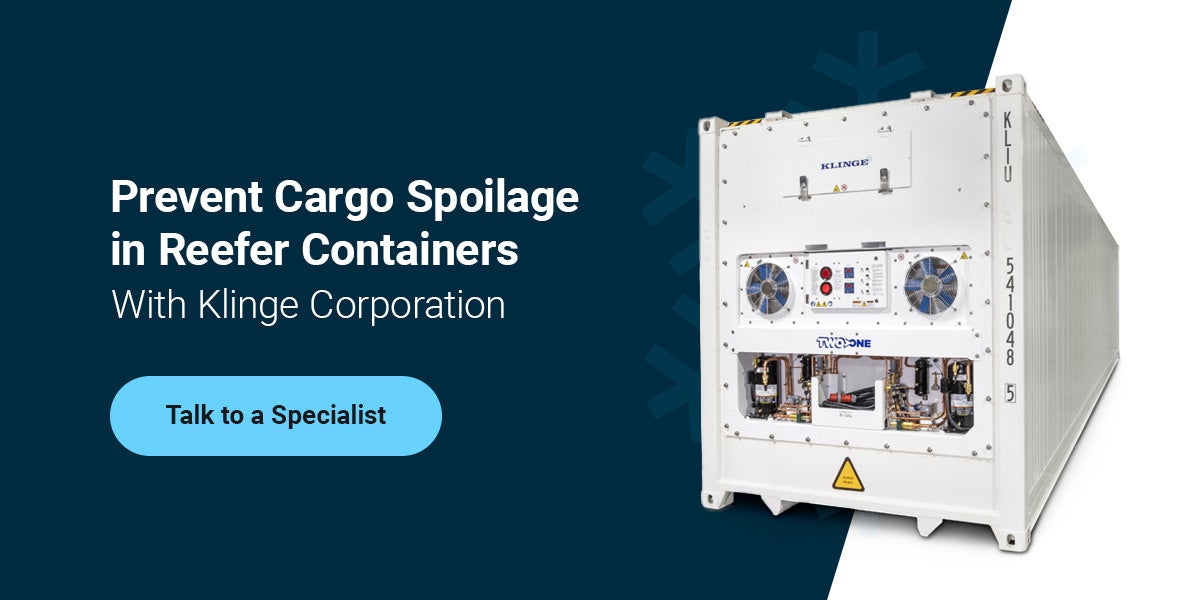
Protecting sensitive cargo demands more than standard solutions. You need equipment engineered for reliability in the most challenging environments. Klinge Corporation has been at the forefront of specialized refrigerated container design for over 40 years. We deliver high-quality systems that ensure consistent temperature and humidity control for reefer containers. No matter your needs, our team can help you choose a solution to protect quality and compliance.
Contact us today to discuss your requirements with a Klinge specialist. We’re here to help you keep cargo moving safely worldwide.